How to Grow Vegetables in Pots on a Balcony
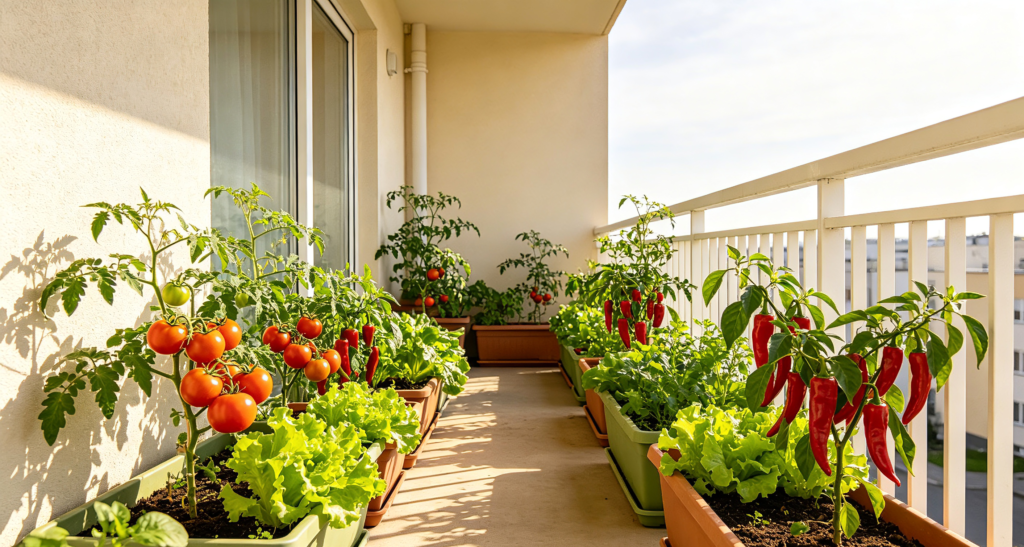
You don’t need a backyard, a raised bed, or years of gardening experience to grow your own vegetables. A sunny balcony, a handful of containers, and the right soil are enough to get started. Container gardening has become one of the most popular ways for renters and city dwellers to grow fresh food at home, and balconies make surprisingly productive small-scale growing spaces. Here’s how to set up a thriving balcony vegetable garden, step by step.
Start With Sunlight
Most vegetables need at least 6 hours of direct sunlight a day to produce well. Before buying a single pot, spend a day tracking how much sun your balcony actually gets.
- South-facing balconies (Northern Hemisphere) usually get the most light and suit tomatoes, peppers, and squash.
- East-facing balconies get gentler morning sun, which works well for lettuce and spinach.
- North-facing balconies get the least light; stick to herbs and shade-tolerant greens like mint or arugula.
If your balcony gets less than 4 hours of sun, a small grow light can help fill the gap.
Choose Pots With Good Drainage
The container matters more than most beginners expect. Look for:
- Drainage holes at the bottom — non-negotiable, since soggy roots rot fast.
- Adequate depth — at least 6 inches for herbs and lettuce, 12 or more inches for tomatoes, peppers, and root vegetables.
- Lightweight material — fabric grow bags or plastic pots are easier to manage than heavy ceramic, especially where weight limits apply.
Always set pots on a saucer or tray to protect the balcony floor and catch runoff.
Use Potting Mix, Not Garden Soil
Regular garden soil compacts inside containers and drains poorly. Use a quality potting mix formulated for containers instead — it’s lighter, holds moisture better, and resists compaction. Mixing in compost or a slow-release organic fertilizer at planting time gives vegetables a strong nutrient base for the season.
Best Vegetables for Balcony Pots
Some crops are simply better suited to container life than others. Good choices include:
- Tomatoes (cherry or patio varieties) — compact, high-yield, and thrive in full sun.
- Peppers — bell, jalapeño, and chili peppers all do well in 12-inch pots.
- Lettuce and salad greens — shallow roots, fast growth, tolerate partial sun.
- Herbs — basil, parsley, chives, and mint are nearly foolproof in containers.
- Bush beans — compact varieties that don’t need trellising.
- Radishes — one of the fastest vegetables to harvest, often ready in 3-4 weeks.
Avoid space-hungry crops like corn or pumpkins unless your balcony is unusually large.
Watering and Feeding
Container plants dry out faster than garden beds because they hold less soil and are more exposed to air and wind. In warm weather, check pots daily — press a finger an inch into the soil, and water when it feels dry. Water until it drains from the bottom, then empty the saucer so roots don’t sit in standing water.
Because nutrients wash out with every watering, feed container vegetables every 2-3 weeks with a balanced liquid fertilizer or fish emulsion during the growing season.
Common Mistakes to Avoid
- Overcrowding pots — give each plant enough room, or growth and yields both suffer.
- Skipping drainage holes — this is the number one cause of dead balcony plants.
- Ignoring wind exposure — balconies are often windier than ground-level gardens, so stake tall plants like tomatoes early.
- Using thin, dark pots in hot climates — dark plastic can overheat roots in direct summer sun; light-colored or double-walled containers hold moisture better.
Frequently Asked Questions
Do balcony vegetables need full sun?
Most fruiting vegetables, like tomatoes and peppers, need 6-8 hours of direct sun daily. Leafy greens and herbs can tolerate partial sun of 4-6 hours.
What is the best pot size for balcony vegetables?
Use at least 5-gallon containers for tomatoes and peppers, and smaller 6-8 inch pots for herbs and lettuce.
Can I grow vegetables on a balcony that only gets morning sun?
Yes. Morning sun works well for lettuce, spinach, kale, and most herbs, though fruiting vegetables will produce less than they would in full sun.
How often should I water balcony container vegetables?
Check soil moisture daily in summer. Most containers need watering every 1-2 days, and sometimes more often in hot, windy conditions.
Final Thoughts
A productive balcony vegetable garden comes down to four things: enough sunlight, containers with good drainage, quality potting mix, and consistent watering. Start small with a few pots of herbs, lettuce, and a compact tomato variety, then expand as you learn what your balcony’s microclimate can support. Within a few weeks, you’ll be harvesting fresh vegetables just steps from your own kitchen.